Windshield and window-glass urethane application cell — 7.5 JPH required, 14–18 JPH measured
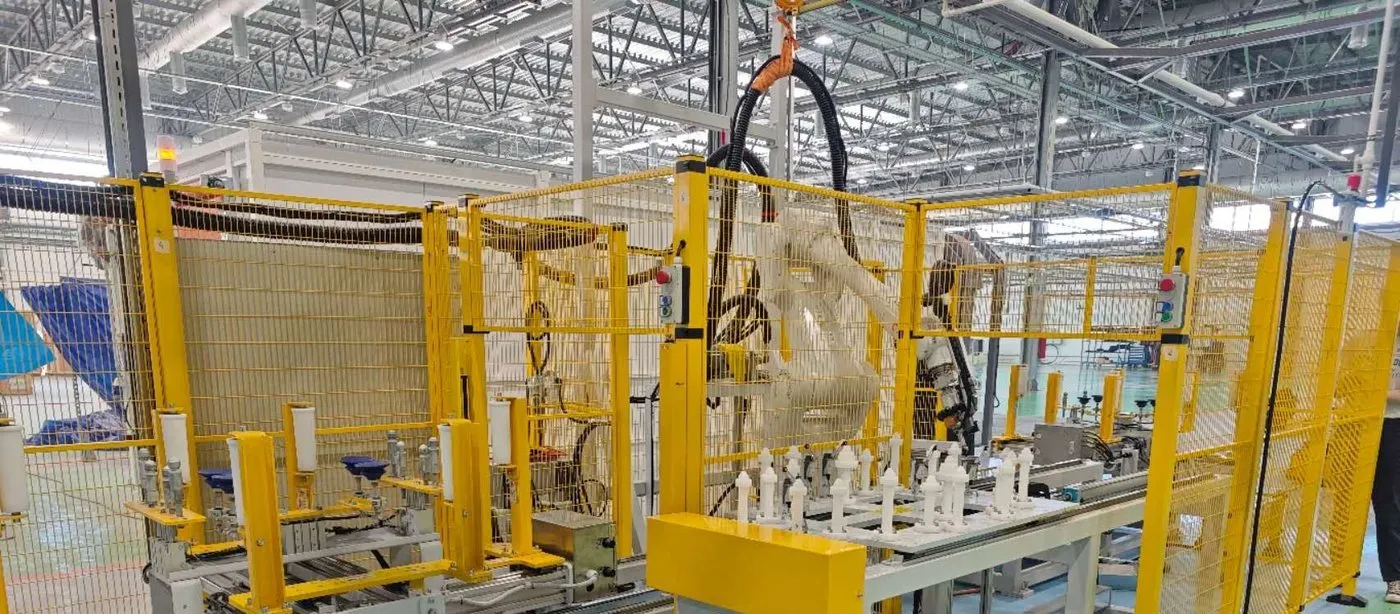
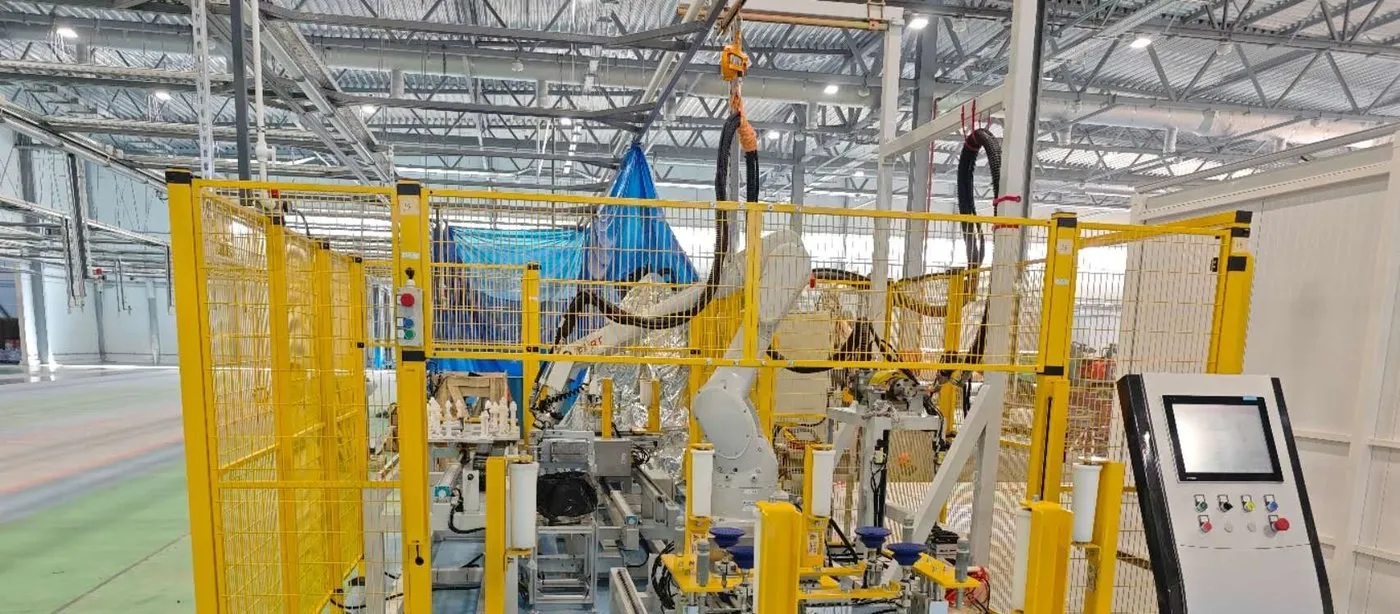
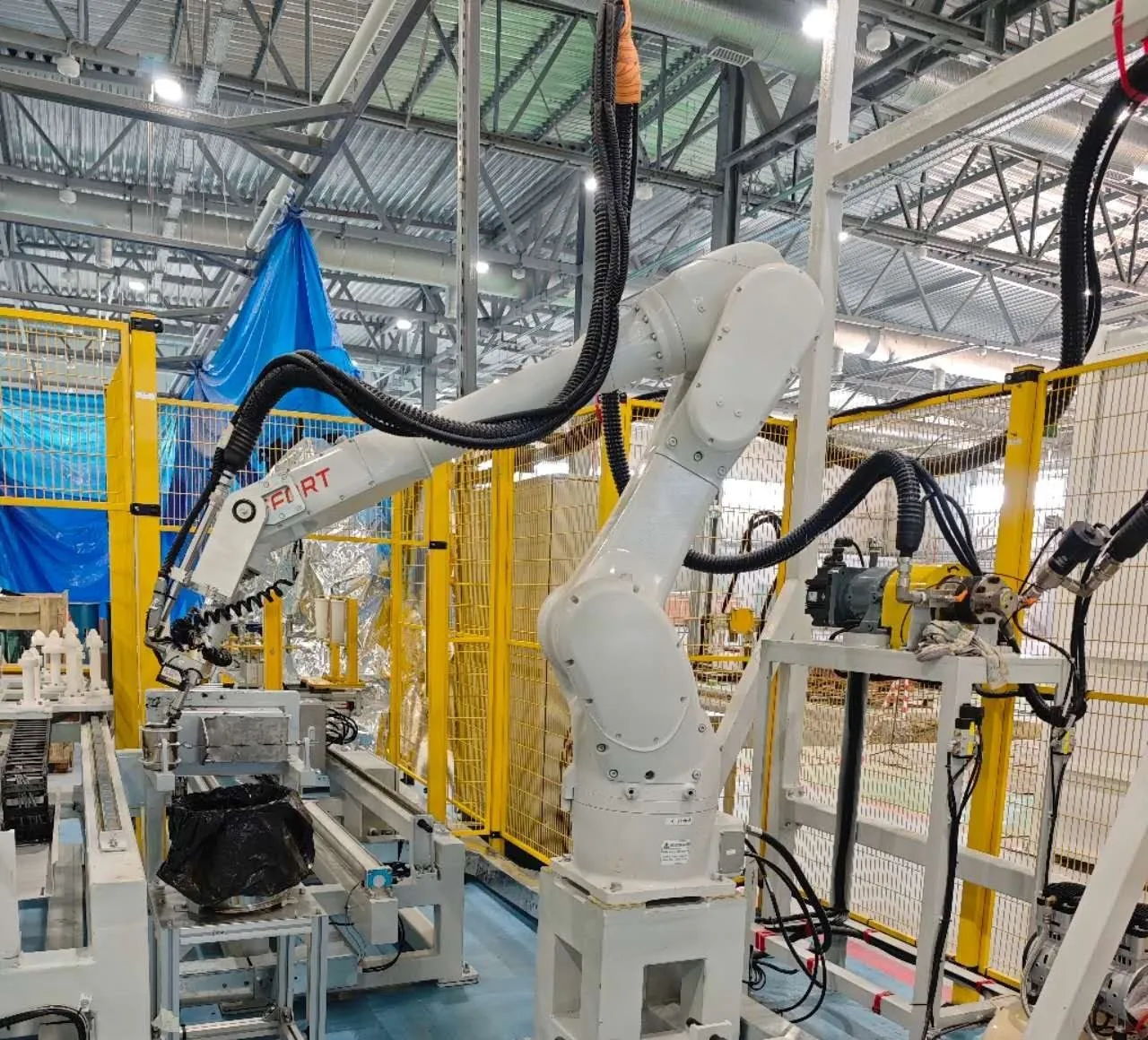
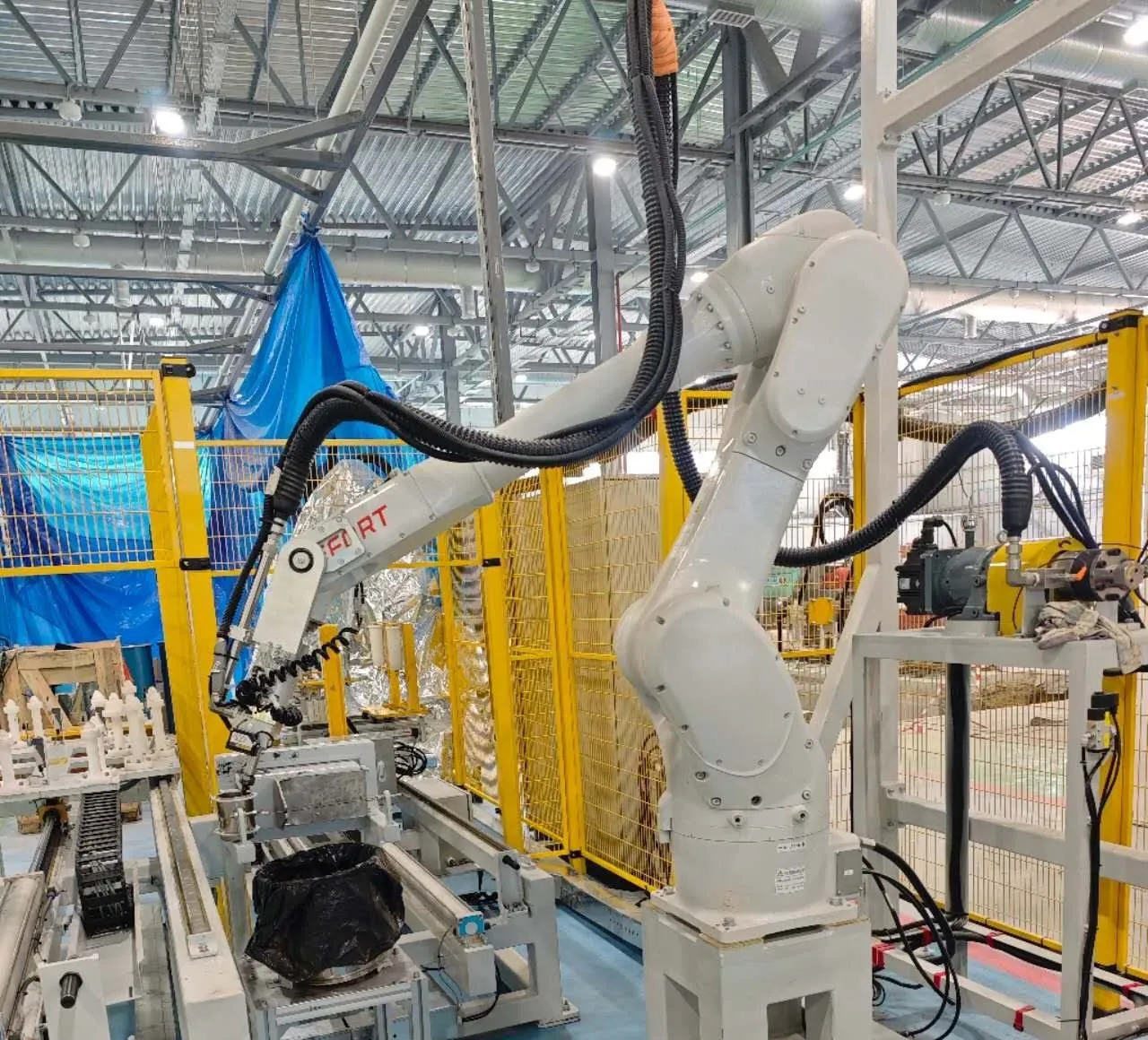
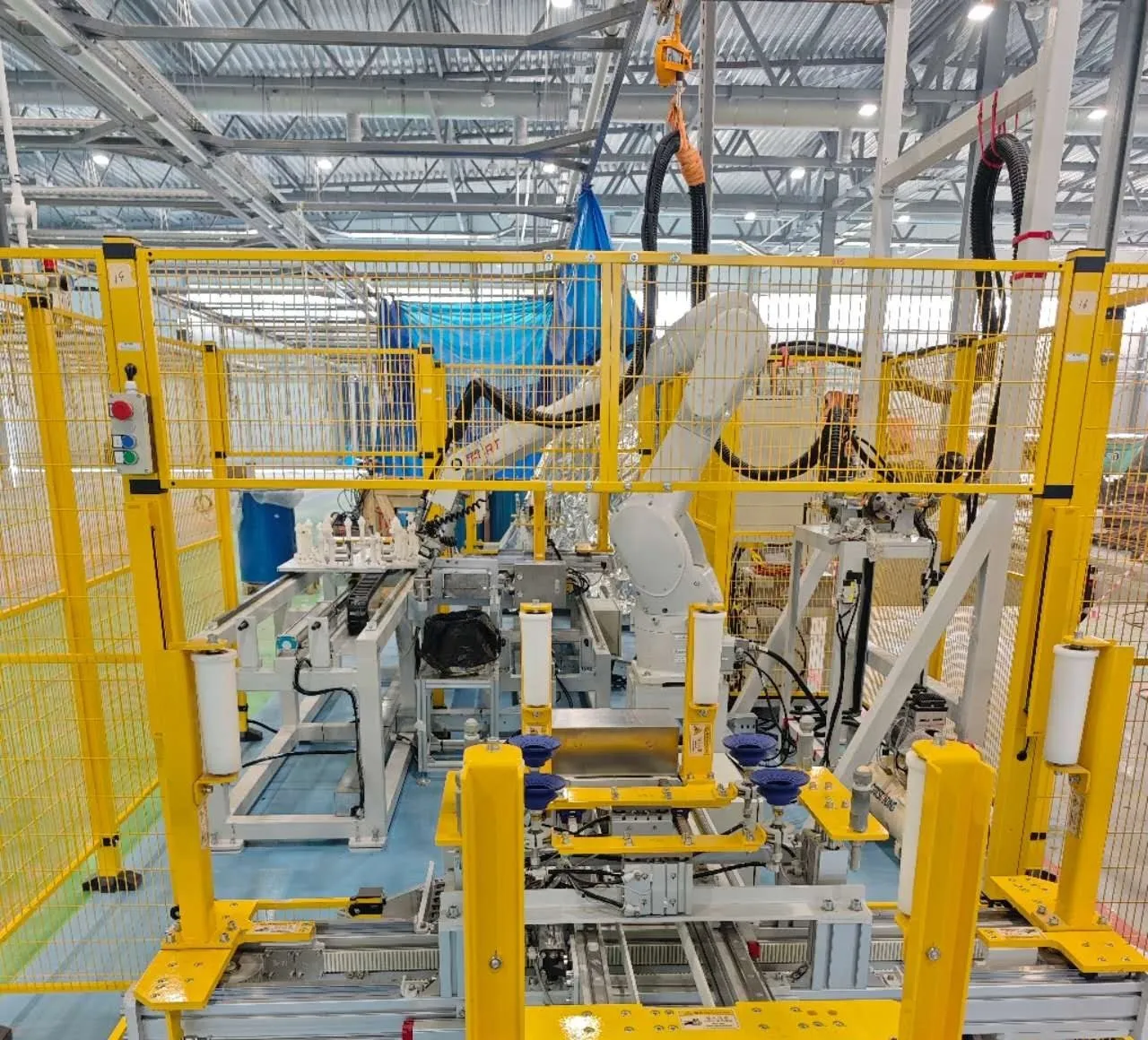
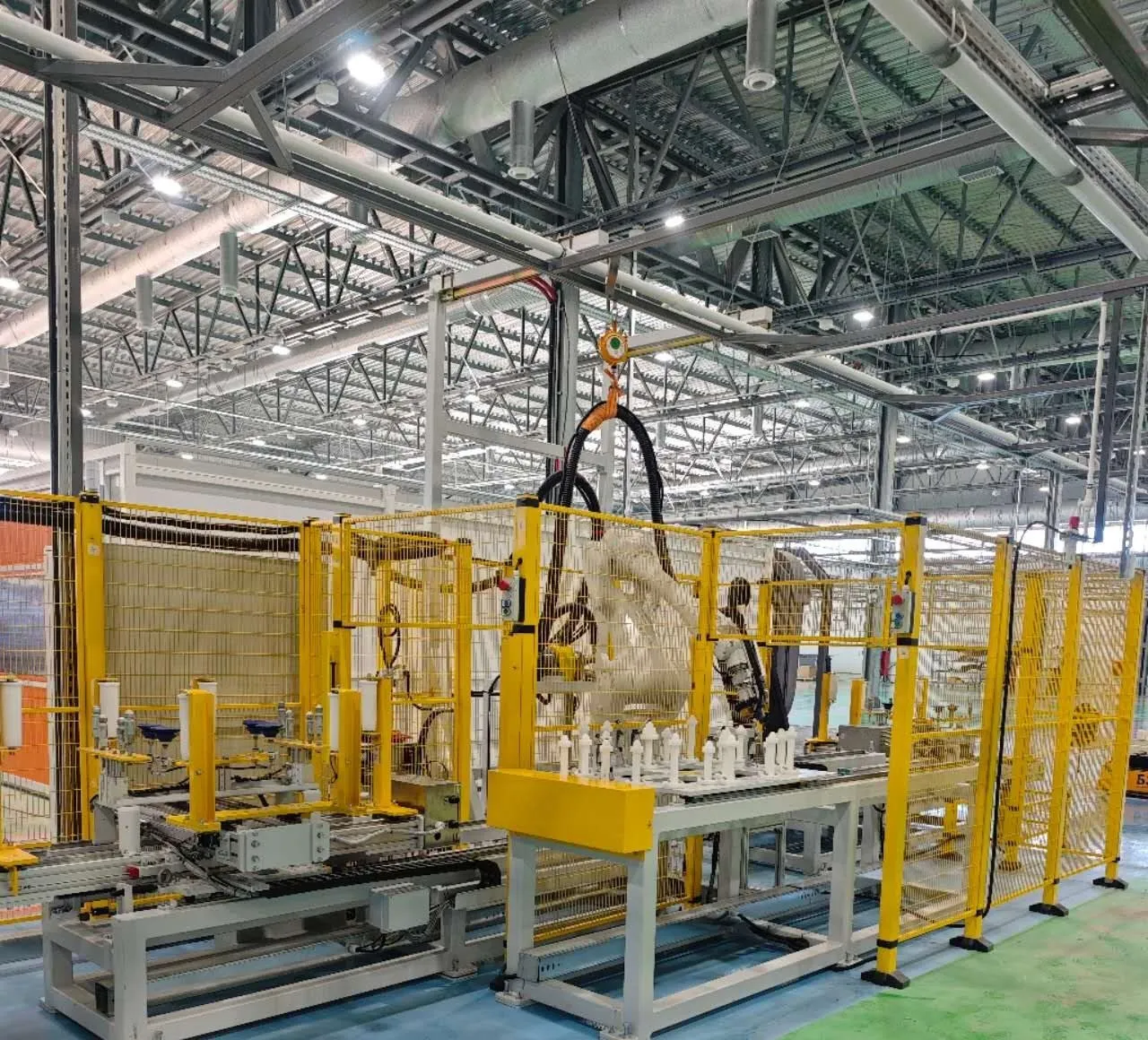
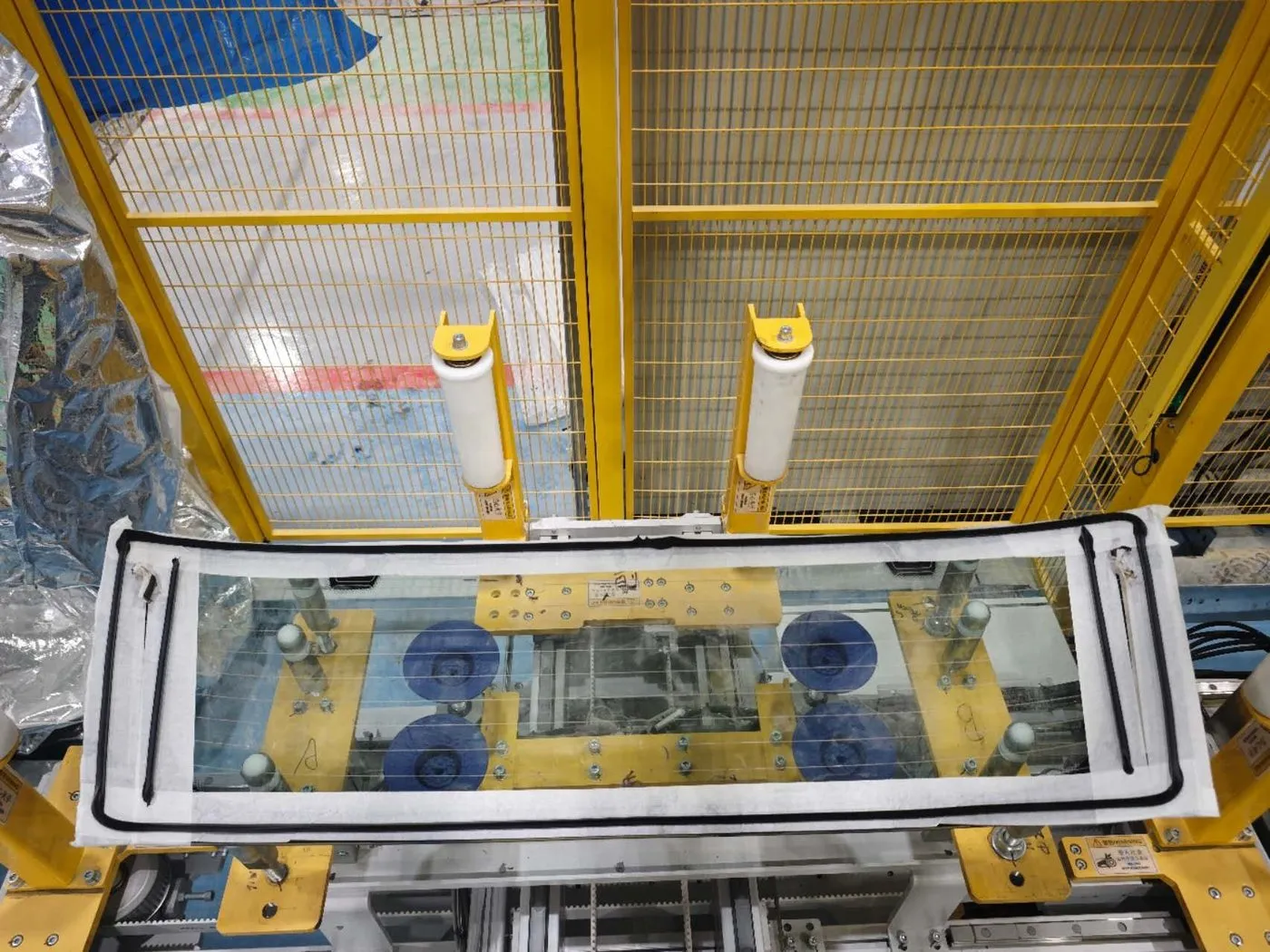
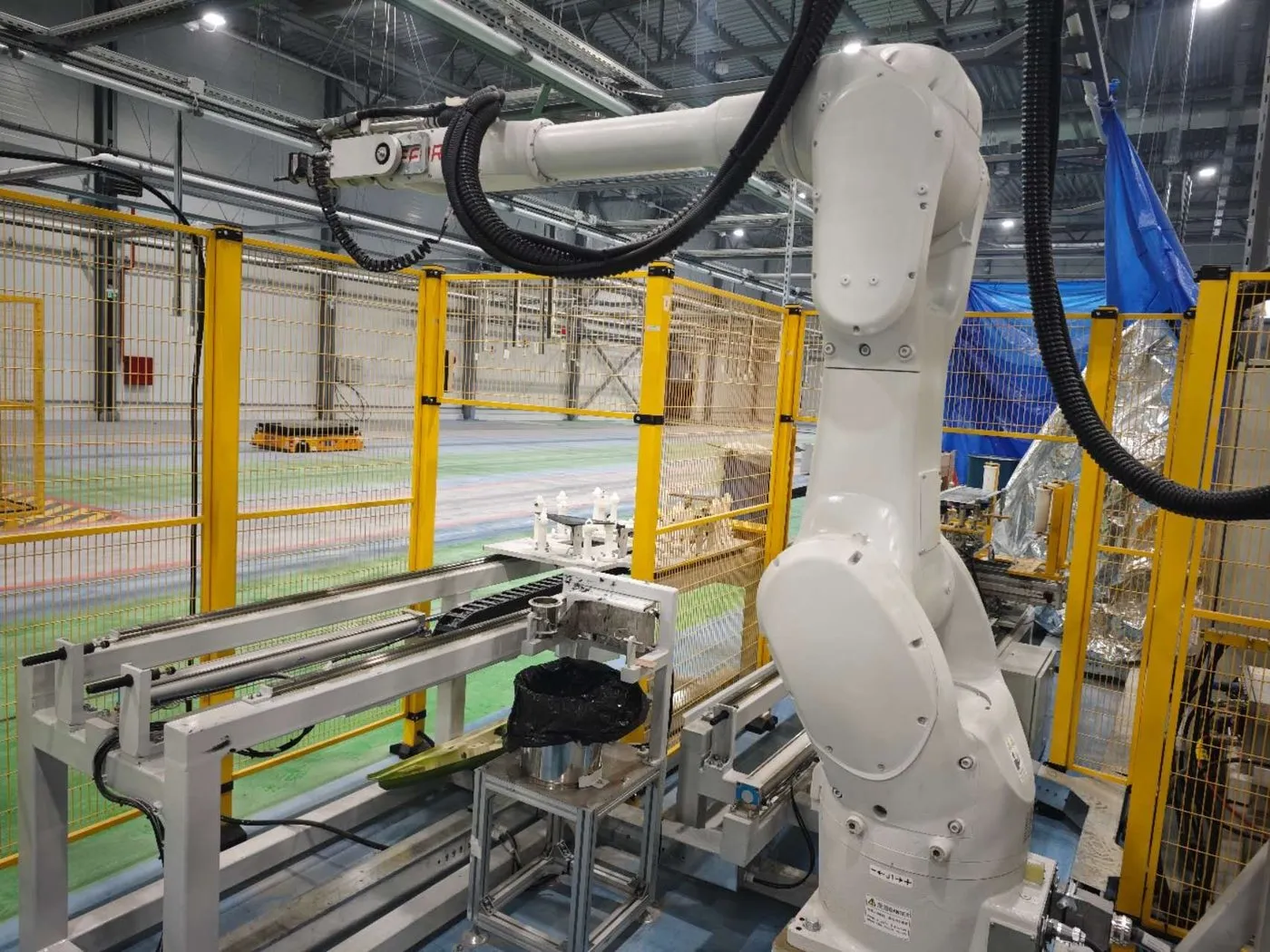
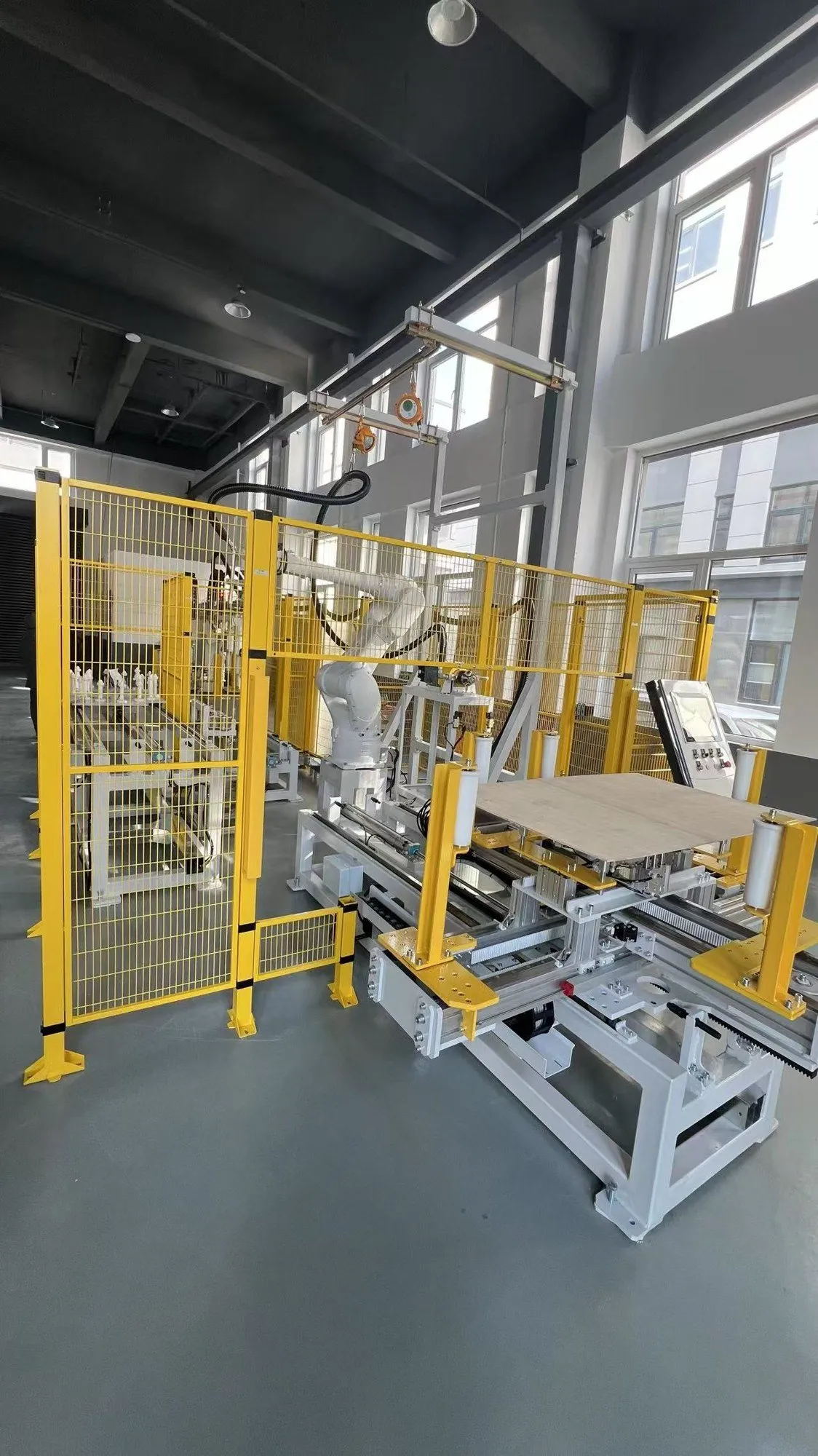
One EFORT ER25-2300 robot applies heated polyurethane to nine glass types across three car models, fed by three centering tables with Keyence laser measurement at ±0.2 mm. The customer required 7.5 jobs per hour; measured output at trial production was 14, 16.7 and 17.9 JPH on the three models. Delivered CIF and accepted.
The problem the customer brought
Not enough skilled operators, a manual process that was hard to manage, and finish quality that was hard to control.
Workpiece
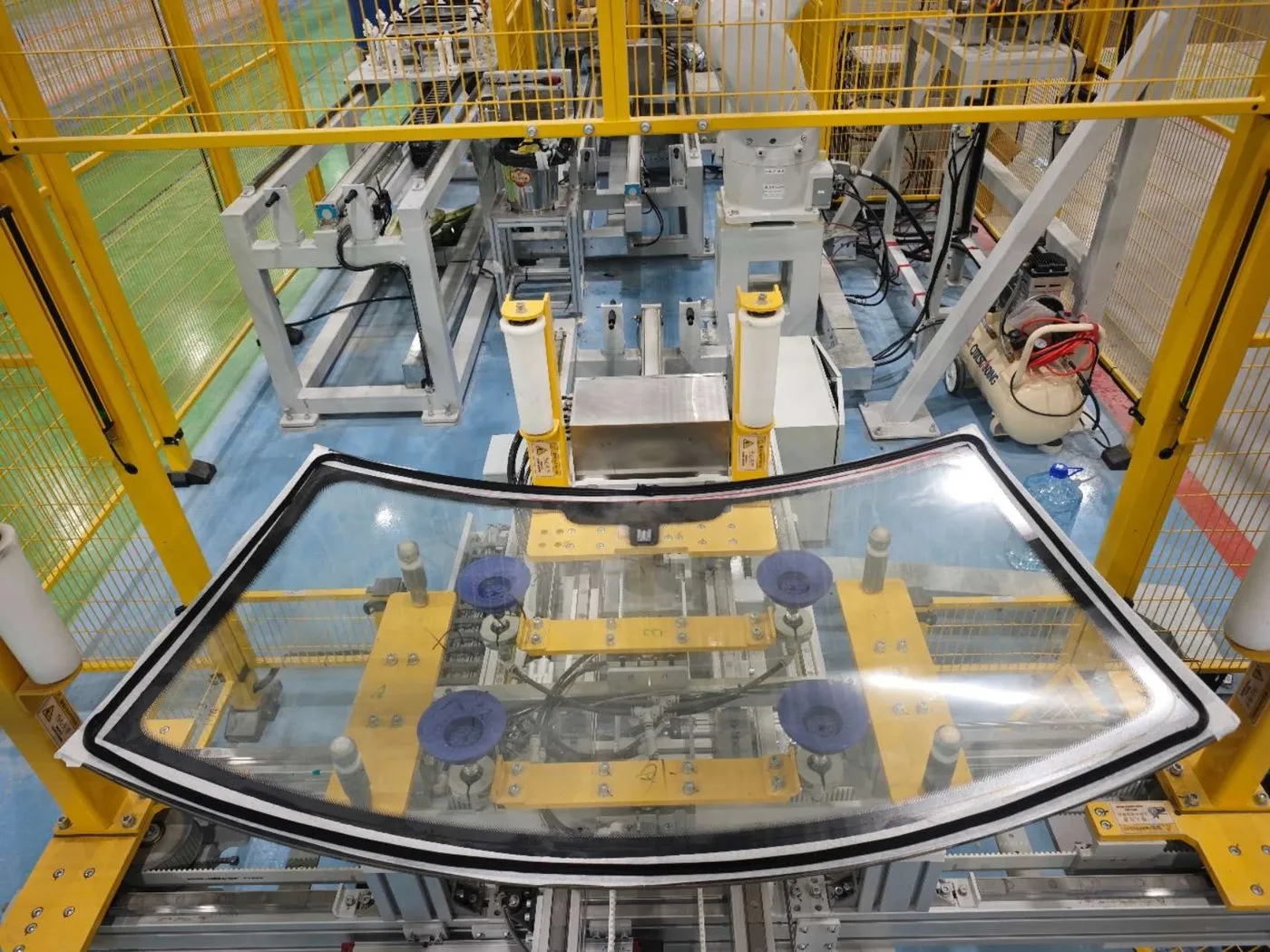
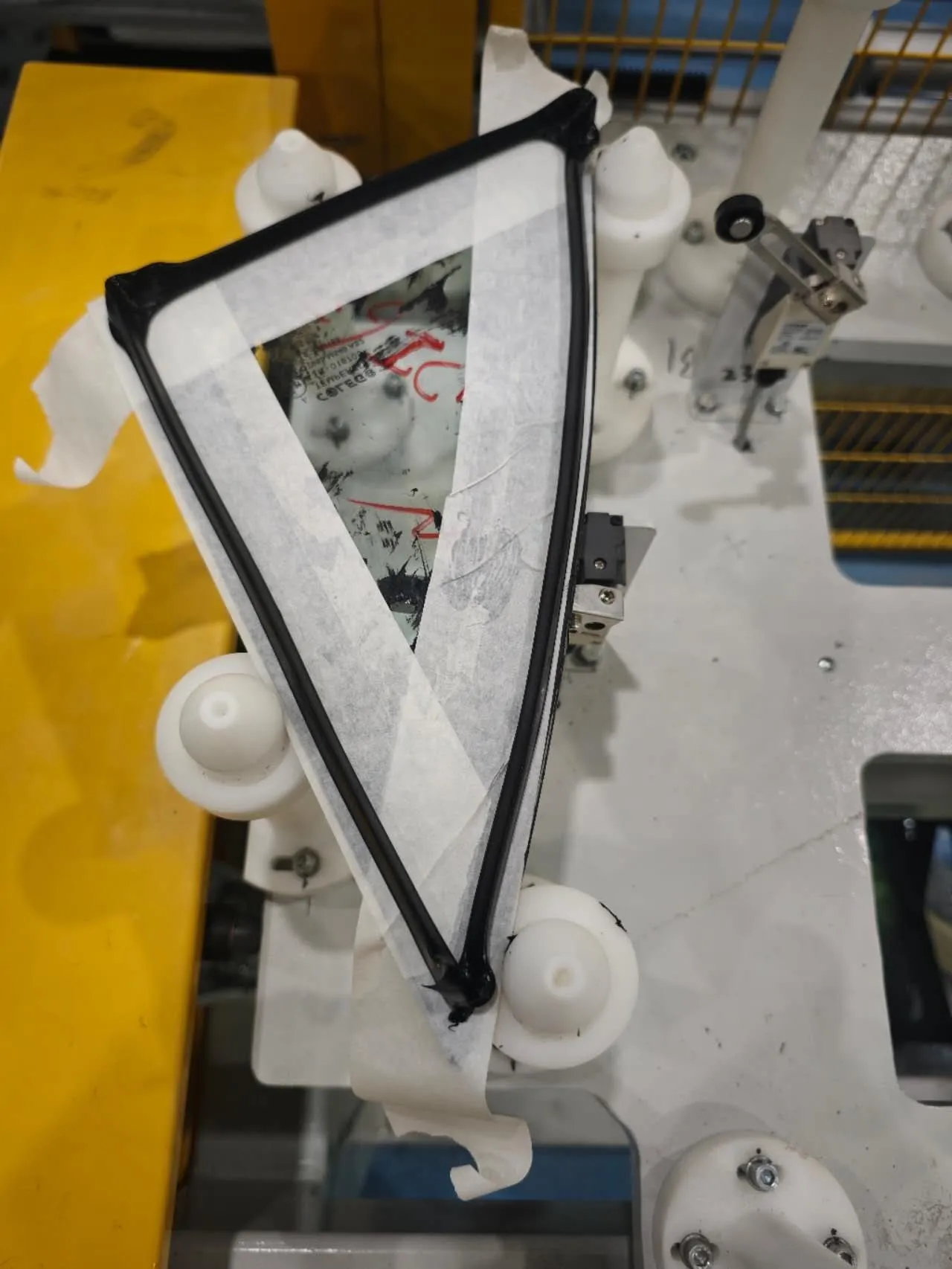
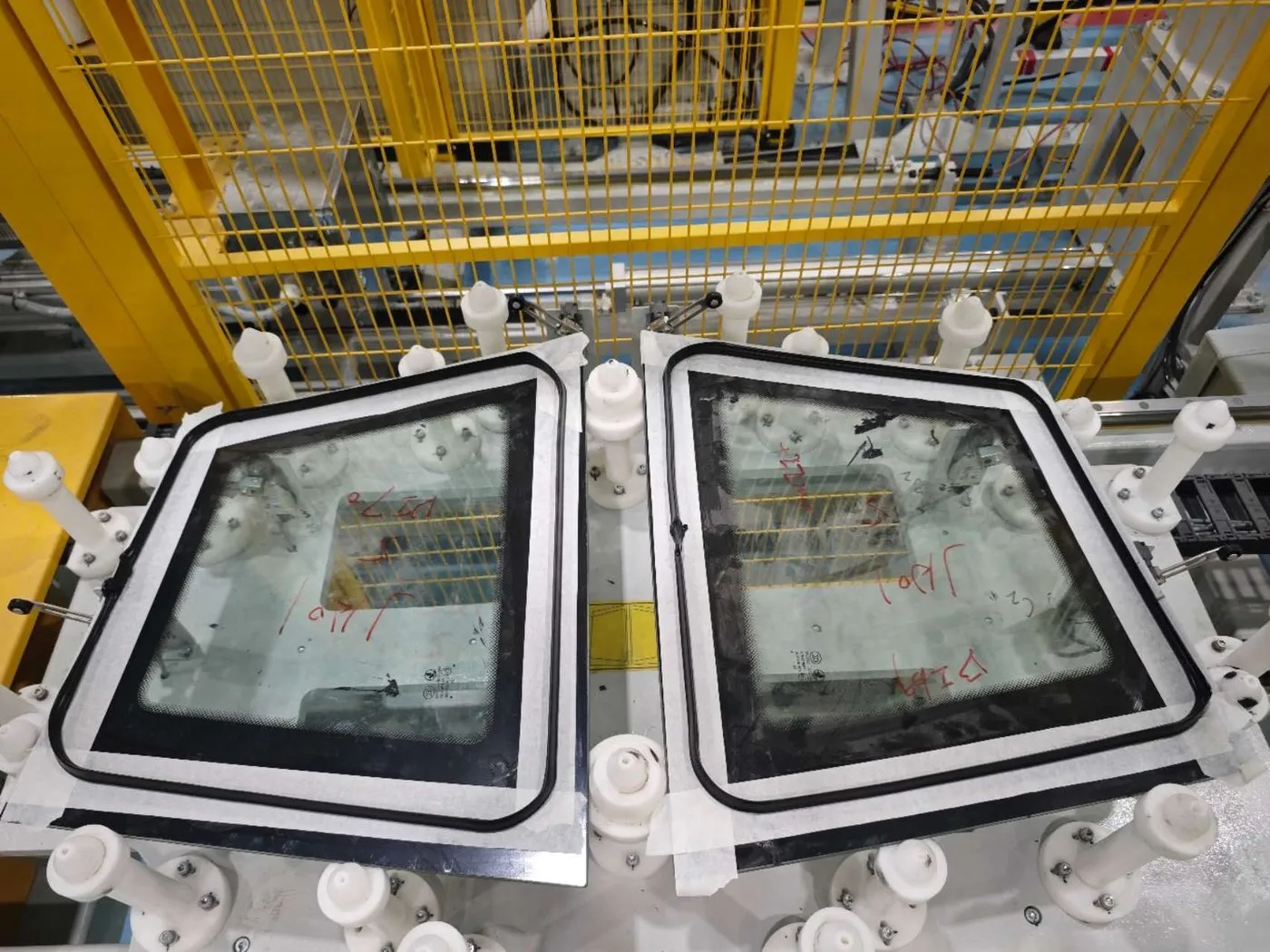
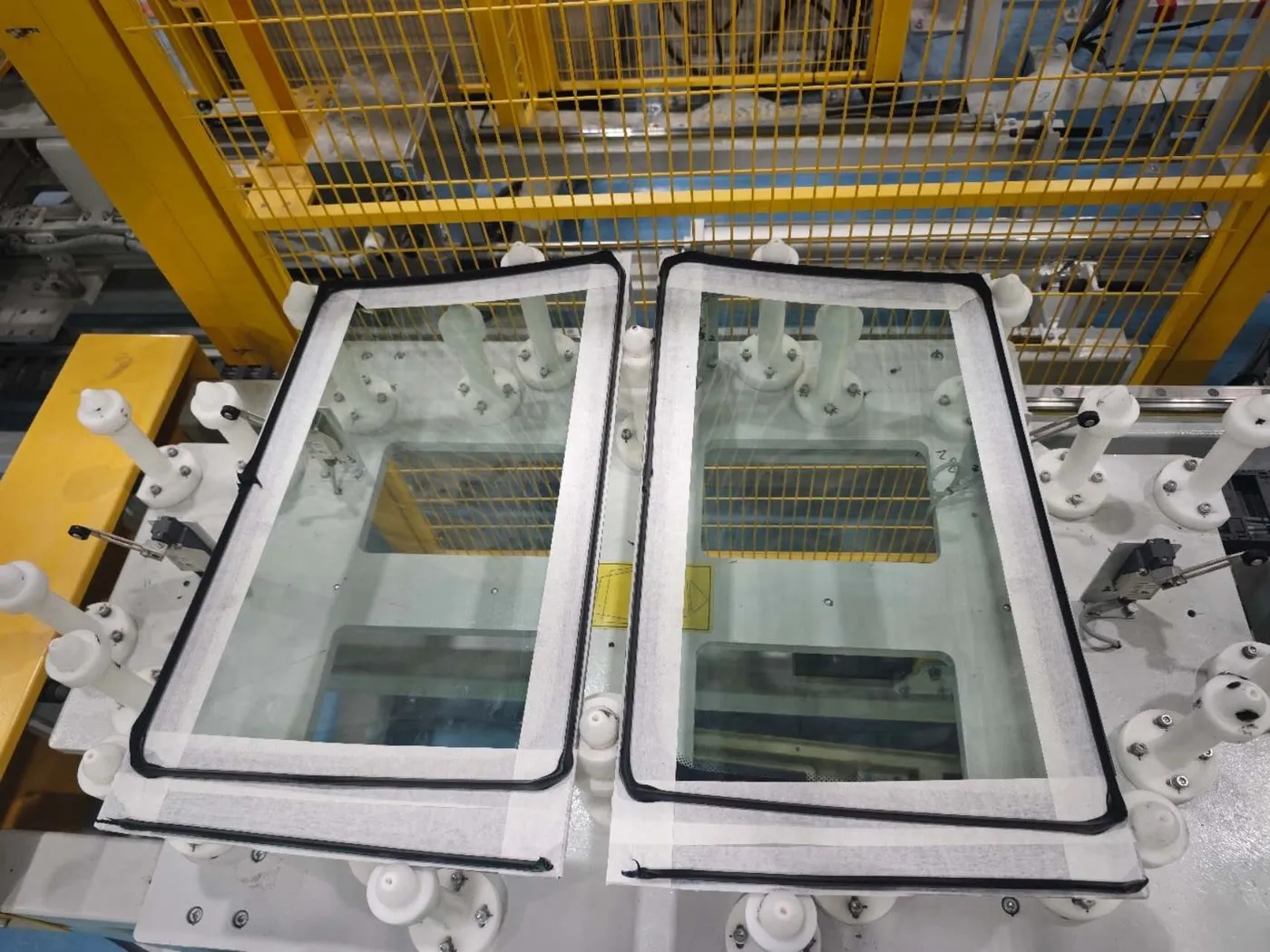
Nine glass types across three car models — windshield, backlight and quarter glass; typical sizes 1215 × 920 × 100, 1080 × 355 × 95 and 645 × 375 × 30 mm. Customer requirement 7.5 JPH.
Robots
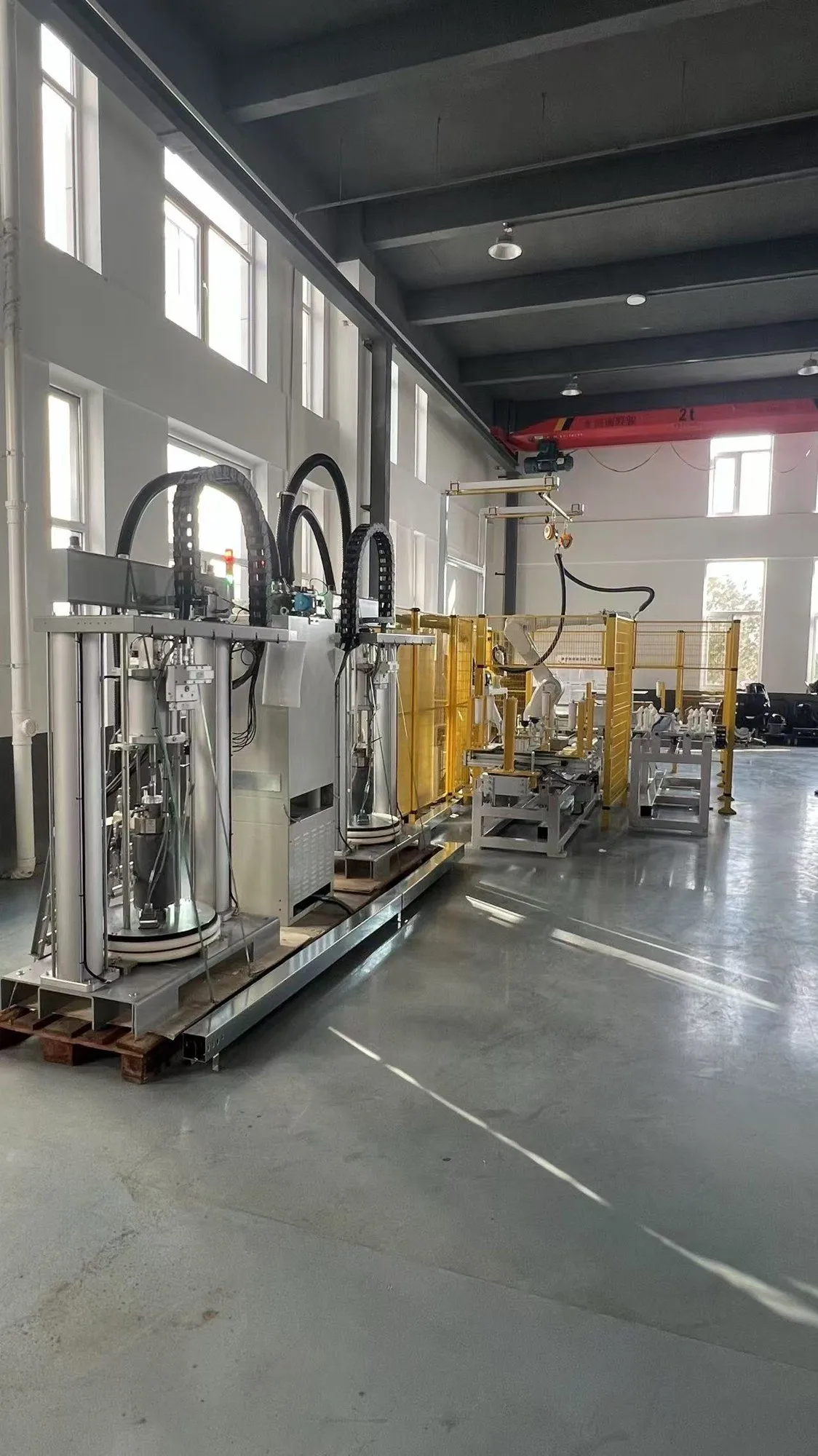
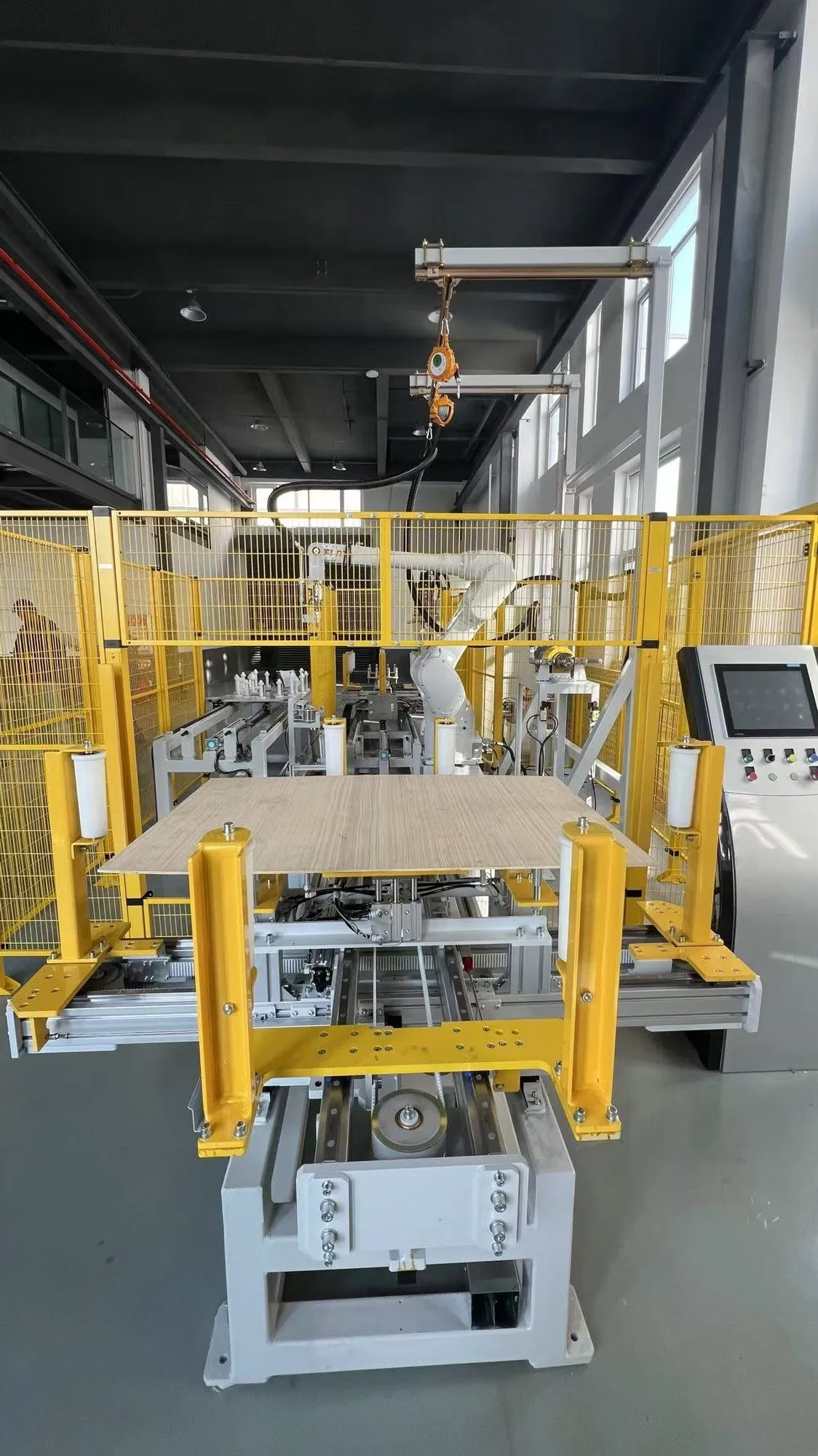
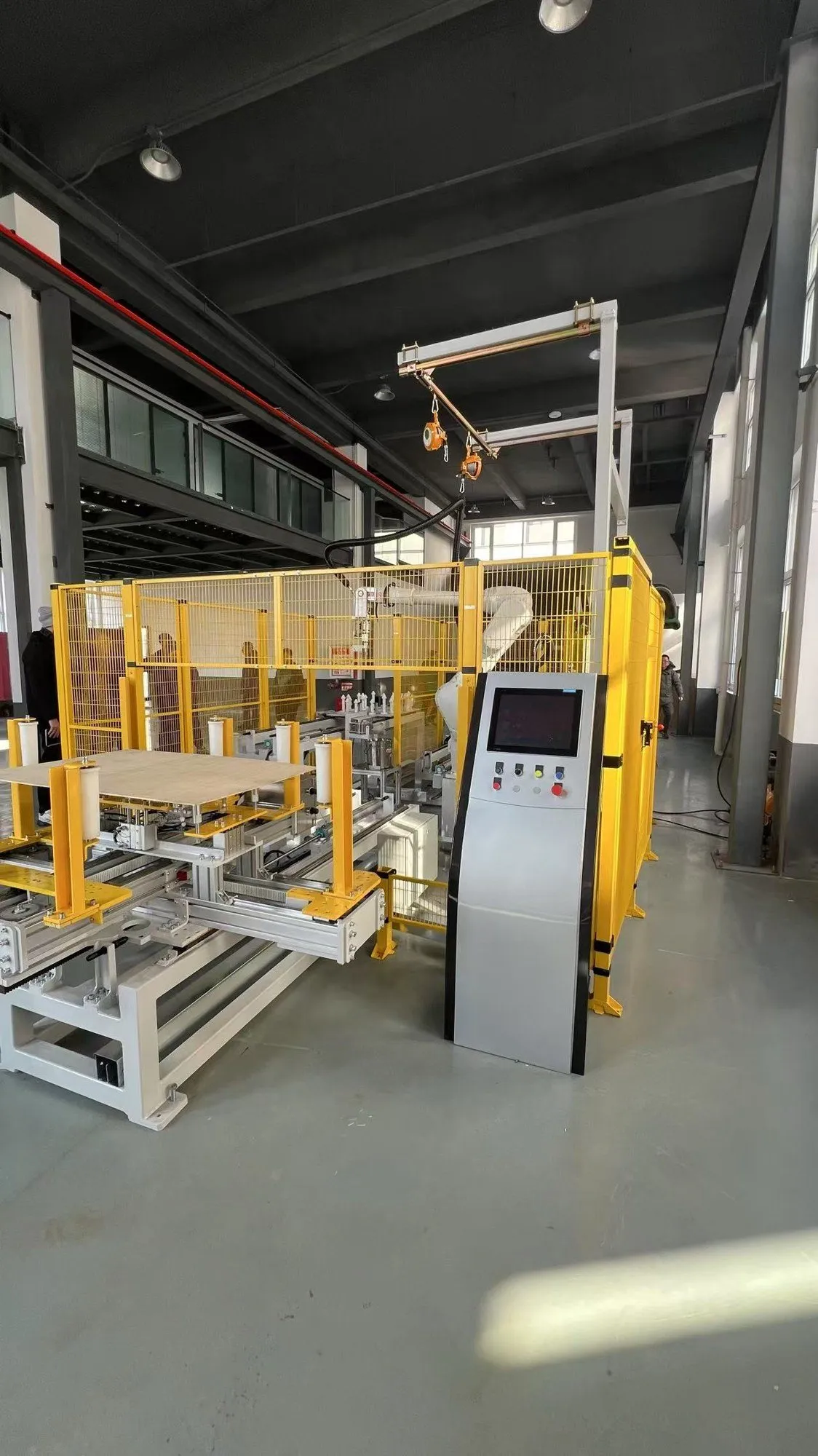
1 × EFORT ER25-2300 with base and dress package; three centering slide tables (two for front and rear glass, one for quarter glass); Keyence laser displacement sensors for curvature check and type identification; centering repeatability ≤ ±0.2 mm.
Process and equipment
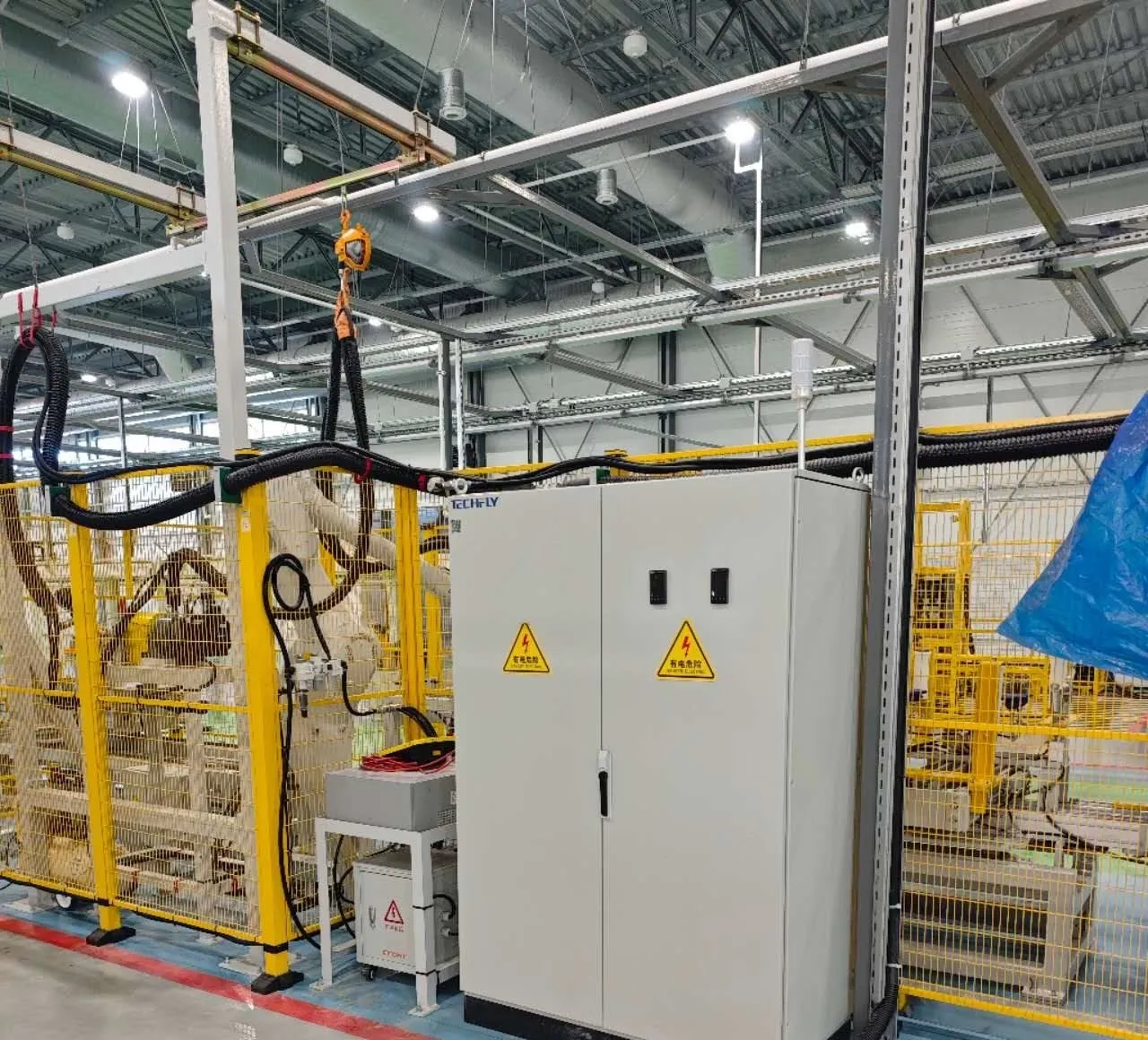
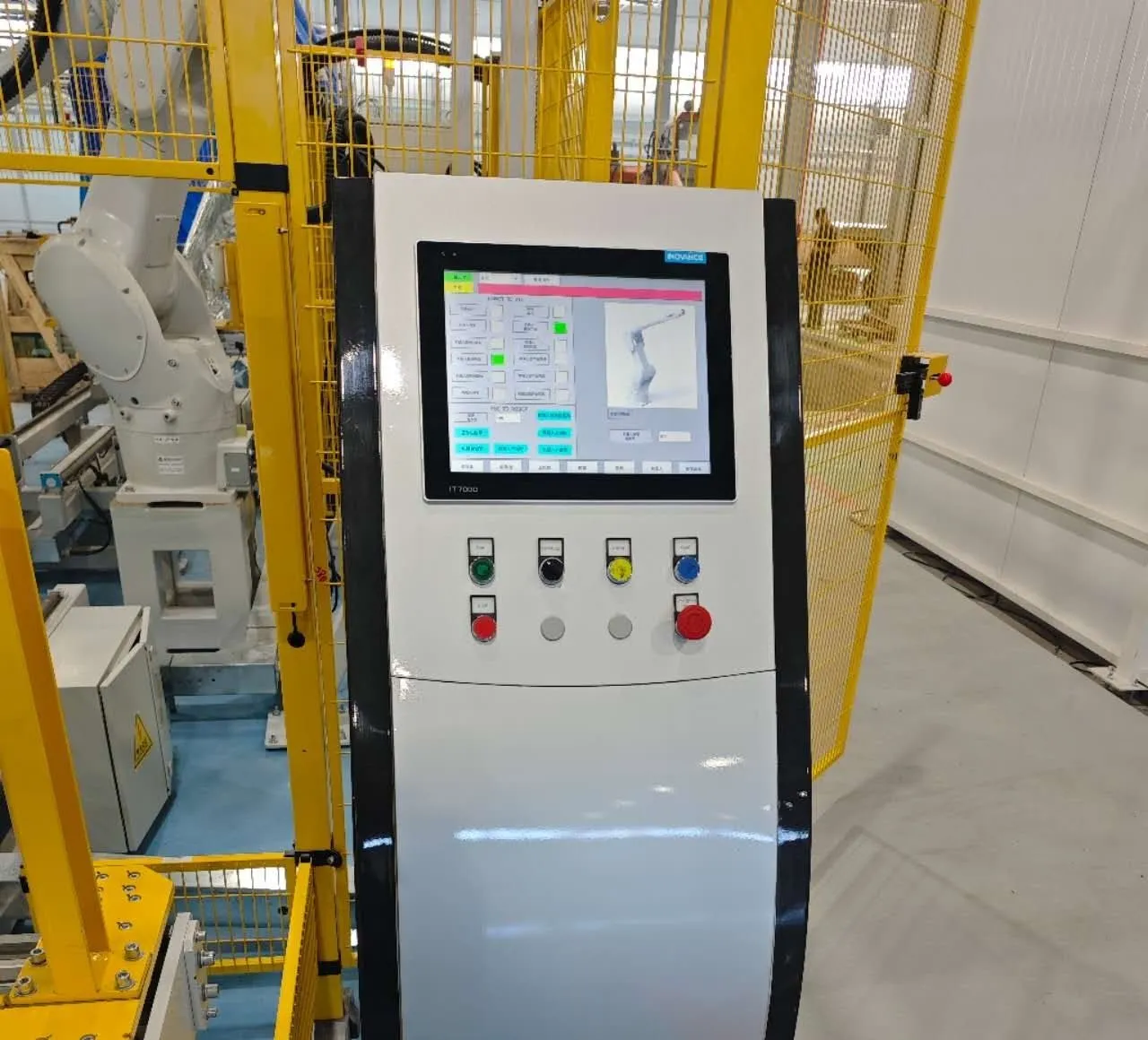
The operator loads the glass onto the centering table, cleans it and applies primer; the centering mechanism measures it and passes the type to the PLC, which calls the matching robot path. Three stations are served by call priority. Adhesive supply is heated end to end: a Trinnova 55-gallon (200 L) twin-pump system (60:1, 360 bar, 168 cc per stroke), a JH AC servo metering gear pump (0–2,500 cc/min, 50 cc/rev, ±0.3 %, rated 120 °C / 30 MPa), a quick shut-off valve at the outlet, a SHINHANG heated 360° rotating glue gun and a DN16 × 15 m heated high-pressure hose. Ten independent Omron temperature zones: hose and pump settable 15–80 °C, process temperature 30–40 °C, limit 60 °C, cold start down to −15 °C. Siemens PLC cell control with guarding, door locks and light curtains; air consumption 3,860 Nl/min at 5–7 bar; the 400 kVA transformer was in the customer's scope.
Pre-integration and factory acceptance test
Equipment counted against the packing list; safety logic proven, robot paths run, electrical circuits and connections checked, inspection point by point before crating.
Delivery and site work
EXW Wuhu; sea freight. On-site work by the customer's team: 30 days.
Commercial terms
CIF port, 6 crates in one 40GP, about 4.5 t. Contract schedule 39 weeks — 120 calendar days production, pre-acceptance in China, 10 working days packing, 2 months sea freight, 45 calendar days installation and commissioning, 5 working days acceptance. Payment 40/30/10/10/5.
Shipping terms on current projects: EXW, FOB, CIF or DAP. Customer names, plant locations and prices are not published.
Result
Delivered and passed final acceptance. Handover included the acceptance checklist, site videos, robot path programs and system backup, PLC and HMI programs, electrical schematics and training attendance records. Measured cycle at trial production was 14 / 16.7 / 17.9 JPH on the three models, against 7.5 required. Nine months after acceptance an engineer returned for seven paid days to refine every glass path, resolve a safety circuit that prevented automatic mode, improve the limit-sensor mounting, and write the process cards and maintenance manual.
What we do differently because of this project
The subcontractor's cost sheet marked "path commissioning for nine glass types overseas" as not included, to bring the total down; a year later we paid to go back and do it. On adhesive cells the on-site path work is certain to happen, and it is priced in from the start rather than cut to make the number look better.
Photographs from this project
Customer names, plant identification and location watermarks are removed. Captions state where an image is a general illustration rather than this customer's plant.