
Robot adhesive application for automotive glass
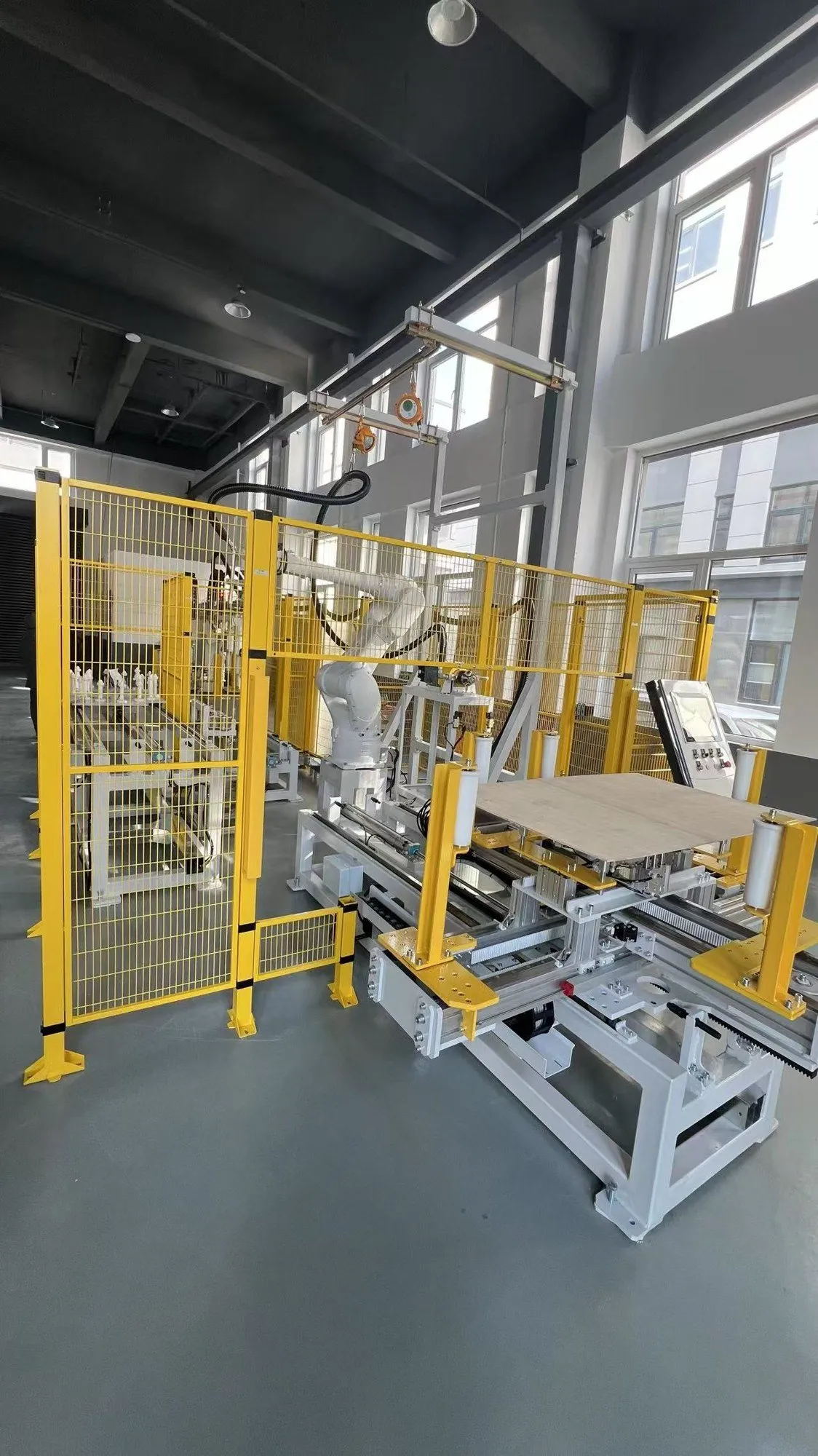
A glass bonding cell applies heated polyurethane to windshields, backlights and quarter glass. One delivered cell handles nine glass types across three car models with one robot and three centering tables measured by Keyence lasers to ±0.2 mm; the customer required 7.5 jobs per hour and the measured result was 14, 16.7 and 17.9 JPH.
The numbers behind this configuration
| Glass types | 9 across 3 car models |
|---|---|
| Required rate | 7.5 JPH — measured 14 / 16.7 / 17.9 JPH |
| Centering repeatability | ≤ ±0.2 mm |
| Adhesive supply | Twin pump, 60:1, 360 bar, heated throughout |
| Metering | 0–2,500 cc/min at ±0.3 % |
| Temperature control | 10 zones, 30–40 °C process, cold start at −15 °C |
Figures come from the project records behind the linked projects below, not from a brochure. Your line will differ — these are what we actually built or engineered.
What we supply
- Centering tables and type identification by laser measurement
- Heated adhesive supply, metering, rotating nozzle and heated hose
- Cell control on a Siemens PLC with guarding, door locks and light curtains
- Path programming for every glass variant — priced in from the start
- Pre-assembly and functional test in China before shipment
What this application taught us
On-site path fine-tuning for every glass variant is certain work on an adhesive cell. Cutting it from the offer to lower the price only moves the cost a year later — on this project we went back and did it at our own expense.
What we need from you
- Part drawings or dimensioned photographs, including the deepest recess to be coated or the full weld list.
- The paint or process specification: 1K or 2K, solvent or waterborne, powder, adhesive or wire, with the required film build or weld size.
- The required output — parts or jobs per hour — and the shift pattern.
- Booth or cell dimensions, the conveyor or hanger arrangement, and the hazardous-area classification your safety engineer has assigned.
Other applications
Robot paintingAutomotive bodiesRobot painting for car bodies
Robot paintingCommercial vehicle wheelsRobot painting for truck wheels
Robot paintingAutomotive plasticsRobot painting for plastic exterior parts
Robot paintingBuses and coachesRobot painting for bus and coach bodies
Robot paintingGeneral machineryRobot painting for machine housings and general machinery
Robot paintingMetal parts on hanging linesRobot painting for metal parts on a hanging line