
Robot, track and positioner supply for integrators
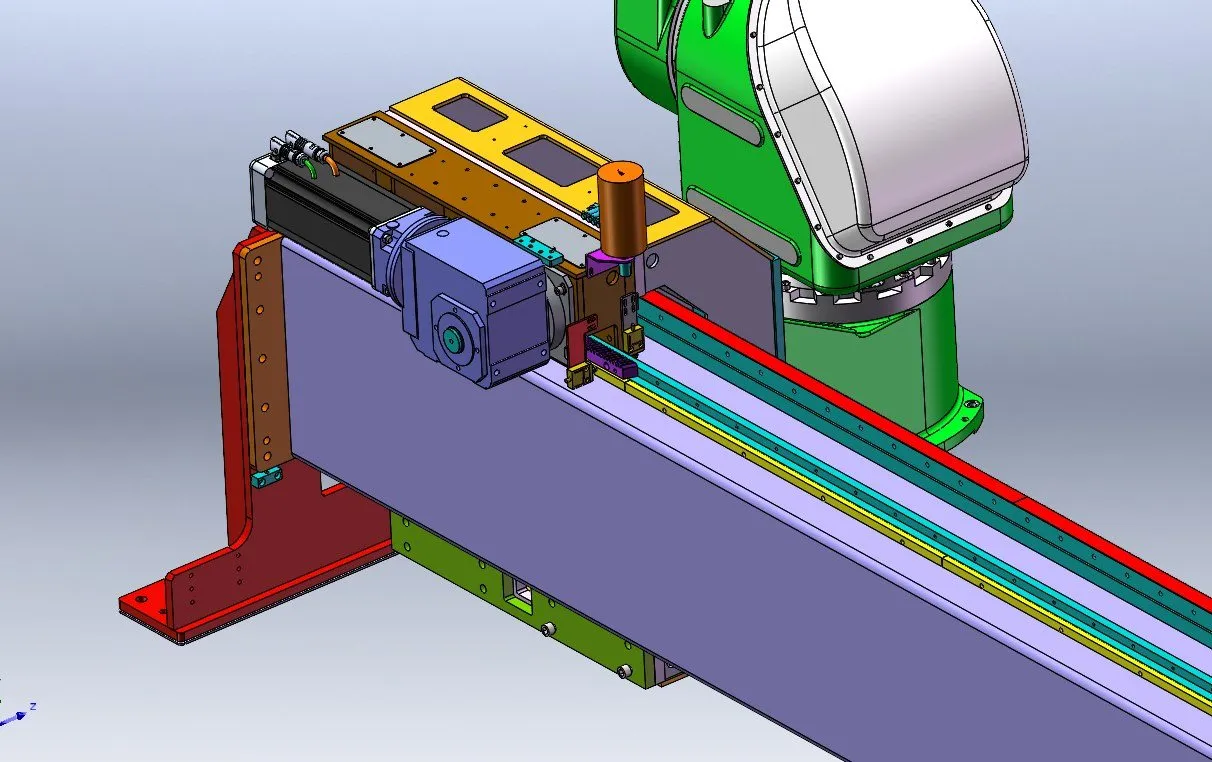
Where you have your own engineering team, we supply hardware only: robots with external-axis drive packages, positioners and seventh-axis tracks, built to drawings your engineering department approves. Two delivered examples — a KUKA KR20 R1810-2 with KRC4 and a Ø1,400 mm self-centering positioner to Chelyabinsk, and a 13,360 mm painting seventh axis with 11,700 mm travel for an Italian robot manufacturer.
The numbers behind this configuration
| Track (Italy) | 13,360 mm overall, 11,700 mm travel, 1 m/s, ≤1,000 kg, ±0.2 mm |
|---|---|
| Track build | Vibration stress relief, two tempering cycles, CNC gantry machining |
| Drive | FASTON planetary helical gearbox, J&T module 3 rack to grade 7 |
| Guidance | HIWIN GH45, 26 m of rail |
| Positioner (Russia) | Self-centering, Ø1,400 mm faceplate, synchronised jaws |
| Terms | EXW or CPT; 45–60 days; payment 50/50 or as agreed |
Figures come from the project records behind the linked projects below, not from a brochure. Your line will differ — these are what we actually built or engineered.
What we supply
- Drawings issued by us and submitted for your approval, with revision rounds priced in
- Mechanical interface to your robot brand and your controller
- Drive package selection where the motors are yours
- Sea packing designed with the section length, quoted with the offer
What this application taught us
When the customer is a robot manufacturer, drawing approval sits with them: the hours for design, submission and revision are quoted, and the number of approval rounds and the response deadline go into the order terms.
What we need from you
- Part drawings or dimensioned photographs, including the deepest recess to be coated or the full weld list.
- The paint or process specification: 1K or 2K, solvent or waterborne, powder, adhesive or wire, with the required film build or weld size.
- The required output — parts or jobs per hour — and the shift pattern.
- Booth or cell dimensions, the conveyor or hanger arrangement, and the hazardous-area classification your safety engineer has assigned.